
Check an AI Answer Before You Act
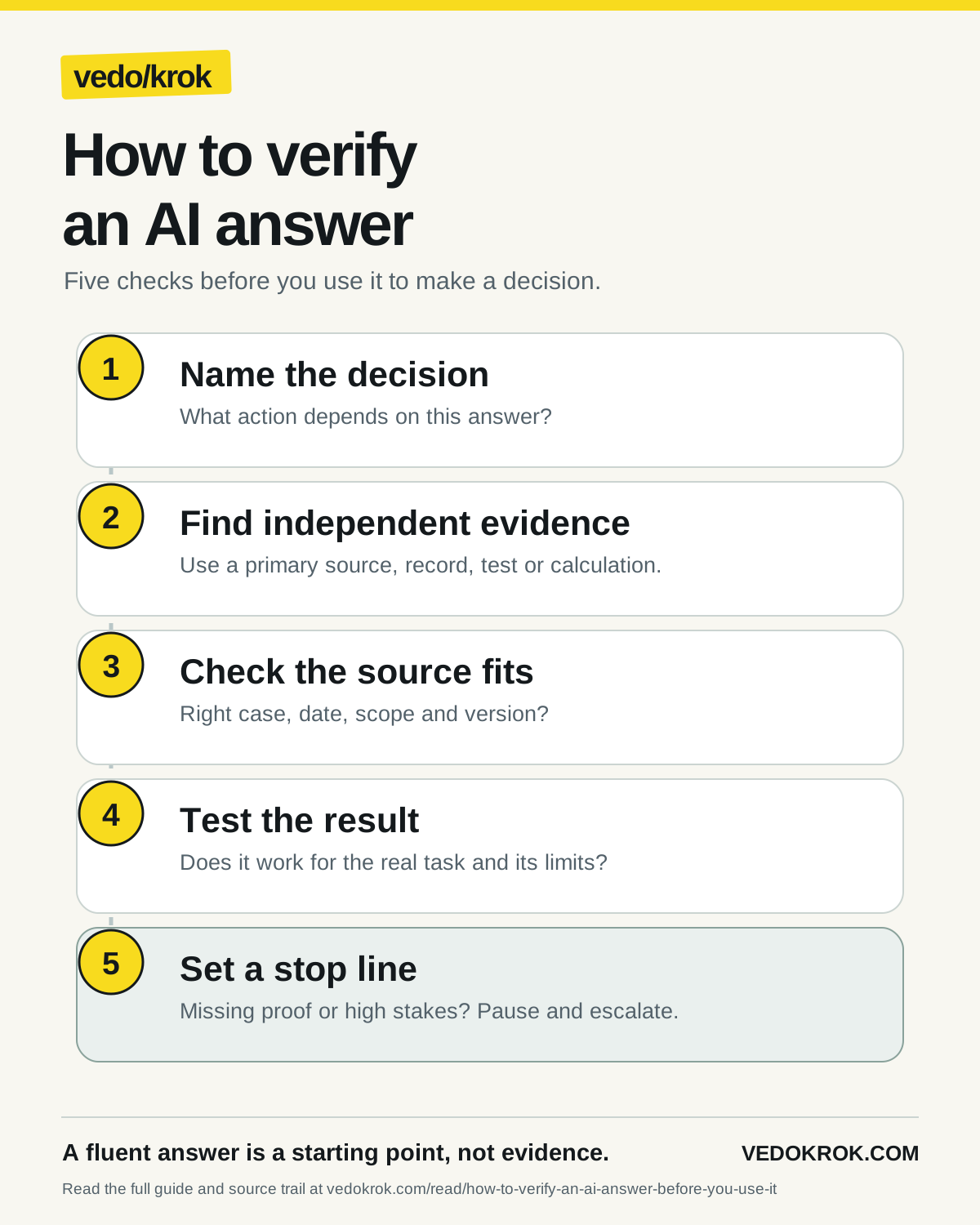
Before acting on an AI answer, identify the claim that could change your decision. Check it against a source outside the AI, test the result, and pause if an important fact remains unknown.
Start with the action you might take #
You do not need to check every sentence equally. First ask what the AI answer may lead you to do. Then mark one or two claims that could change your choice. Check those claims against evidence the AI did not provide before you send, buy, set up, publish or approve something important.
For brainstorming, a quick check may be enough. Check more when a mistake could cost a lot, be hard to undo or affect someone else.
Sources: Cross-check the fact before the agent acts on it · Give the second check evidence the first answer did not create
1. Pick the claim that could change your choice #
Break the answer into claims you can check. Look at names, dates, prices, package versions, quotes, policy rules, source summaries and calculations. Advice may also depend on details the answer leaves out, such as the product version, country or other limits.
Ask: If this claim is wrong, would I choose differently? If not, it may need less checking than the claim behind your decision.
2. Check it with evidence outside the AI #
Do not ask the same assistant to confirm itself. Use the original documentation, an official record, a test you run, a calculation you can repeat or another check that does not rely on the same answer.
Check that the source fits your case: the right product, version, country, people or date. A real citation may be out of date or support less than the answer claims.
Sources: Give the second check evidence the first answer did not create · Cross-check the fact before the agent acts on it
3. Test the result on the real task #
A result may look right and still fail the task. Code can run while using the wrong function. A summary can miss the detail that changes your choice. A plan can include every heading and still not fit your time or budget.
Run one small test that could catch the costly mistake. A successful example shows only that case worked.
Sources: Check that it meets the specification and solves the real problem
4. Treat confidence as a clue, not proof #
Confident wording does not make an answer true. A confidence score helps only if tests show that its scores match how often the AI is right for this kind of task. When a mistake matters, check the source and test the result.
Ask: What evidence could show that a convincing answer is wrong?
Sources: Do not expose AI confidence until you have tested its calibration
Write down what you checked #
If you may need to revisit the decision, write down six things: what you plan to do; what claim must be true; where you checked it; why that source fits your case; what could show the answer is wrong; and what you decided to do.
If the same kind of mistake happens again, turn it into a test you can run next time.
Pause if you cannot check an important fact #
Sometimes the answer is “not confirmed.” If your next step depends on a fact you cannot check, pause, choose a smaller step or ask someone with the right expertise.
The linked example checks a narrow claim about using Node.js's built-in assert function for true/false tests. It compares version-matched documentation with a counterexample and records the result. It does not verify that a third-party package is genuine or safe; those need separate checks.
Use it now
Copy a short AI answer check
Use this before an AI answer could affect an important decision. Fill in only what matters. The blank template is on this page; it does not collect your answers.
Decision:
Claim to check:
Source:
Why it fits:
What could prove it wrong:
Next step: use / test / reject / ask for help
Use this with an AI assistant
Get help turning the guide into a plan, with practice tasks and a clear next check.
Verify an AI Output Before You Act